
Ephantus Kanyugi
AI Ghost Worker
On the violent art of sanitising AI. Dark truths about hidden human armies. Shaping the 'Divine Machine'
WHO HE IS
-
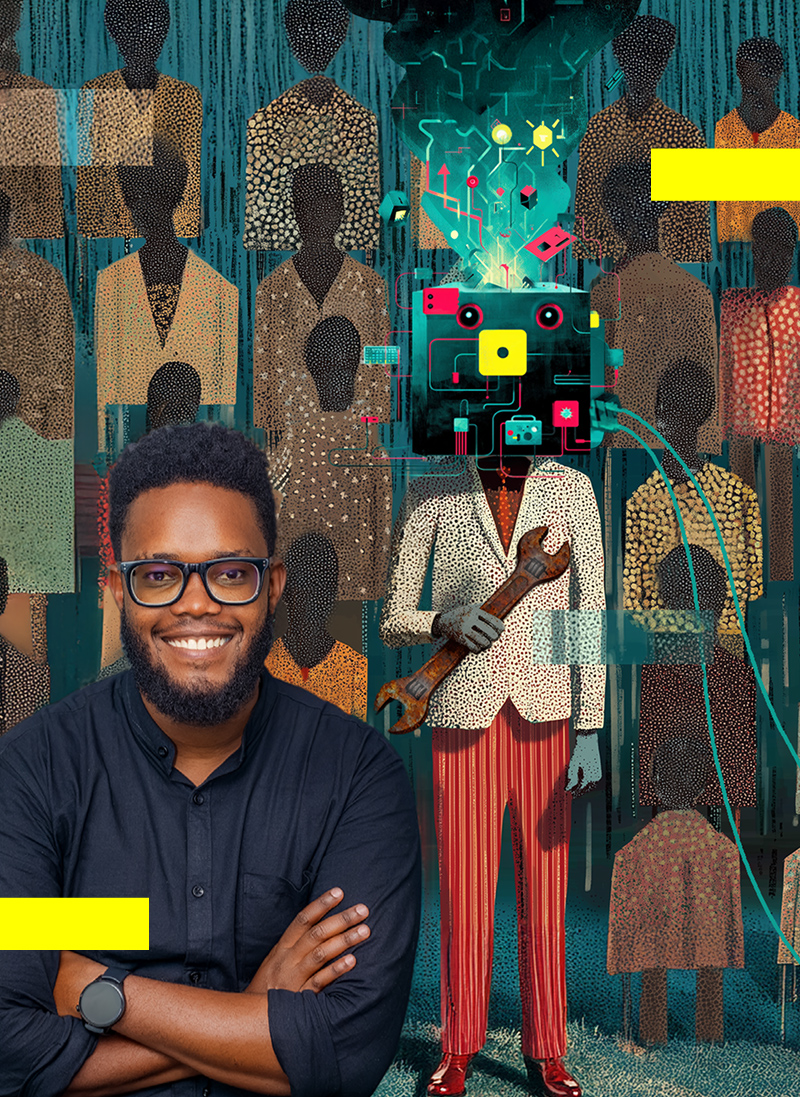
Co-founder of Data Labelers Association. And a close witness to the hidden human underbelly of artificial intelligence. A worker in the shadows of the machine— and, perhaps therefore, its most unsettling chronicler.
-
He was an AI ghost worker based in Kenya— labeling, filtering, and cleaning the data that trains the world’s most powerful systems.
-
A survivor who has worked in the trenches of an industry to sanitise AI: the invisible labor that makes artificial intelligence appear neutral, safe, and divine, while transferring trauma to the humans behind the screen.
HIS CORE QUESTION
-
Who really builds AI, who profits from it, and who pays the price?
-
Is intelligence “artificial,” or is it extracted from a vast, hidden, disposable workforce?
-
Kanyugi’s answer cuts through Silicon Valley optimism: The machine is not self-made. It is assembled from human exhaustion, psychological toll, and moral erasure.
HIS KEY IDEA
-
Tech companies present AI as omniscient, objective, and almost sacred. A Divine Machine.
-
But Kanyugi is the living example of the opposite: behind the illusion of divinity lies a brutal assembly line of human work. Attention. Judgment.
-
For every polished chatbot and generative image, there are thousands of workers who have sifted through violence, abuse, hate, and horror so users never have to see it.
-
The cleaner the AI, the dirtier the human cost. Where the world sees automation, he sees erased human armies — dispersed across the Global South, underpaid, psychologically burdened, and politically invisible.
THE NUMBERS BEHIND THE MYTH
Global AI revenues are immense:
-
Leading AI labs such as OpenAI are estimated to be on track for roughly $10 billion in annual revenue, with competitors like Anthropic and Google’s AI units earning several billion each.
-
Major technology firms (e.g., Microsoft) now report tens of billions of dollars in AI-related revenues as AI becomes a core part of cloud and product offerings.
Yet the workers who make these systems intelligible earn tiny fractions of this wealth:
-
Studies of global annotation platforms show that many ghost workers — including those doing the brutal task of filtering harmful or graphic content — earn around $1 to $2 per hour in parts of the Global South.
-
Even formal AI data labeling jobs in India report salaries often in the ₹2 lakh to ₹8 lakh per year range, amounts that translate into a few dollars per hour — far below the profits being extracted upstream.
HIS WARNING
-
A world that worships the Divine Machine risks forgetting the humans who sustain it.
-
When responsibility is outsourced to invisible labor, accountability disappears.
-
If we normalize hidden exploitation today, we build an automated order that is efficient — but ethically hollow.
AT SYNAPSE
At Synapse, Ephantus Kanyugi will pull back the curtain on the “clean” AI revolution, revealing the emotional and ethical debris it leaves behind. He will ask whether a world built on invisible labor can ever be just, and whether the Divine Machine can be redesigned to honor, rather than erase, the humans who make it possible. His question: If AI is to shape our future, whose lives are we willing to sacrifice, and whose do we choose to see?